OLD SCHOOL.
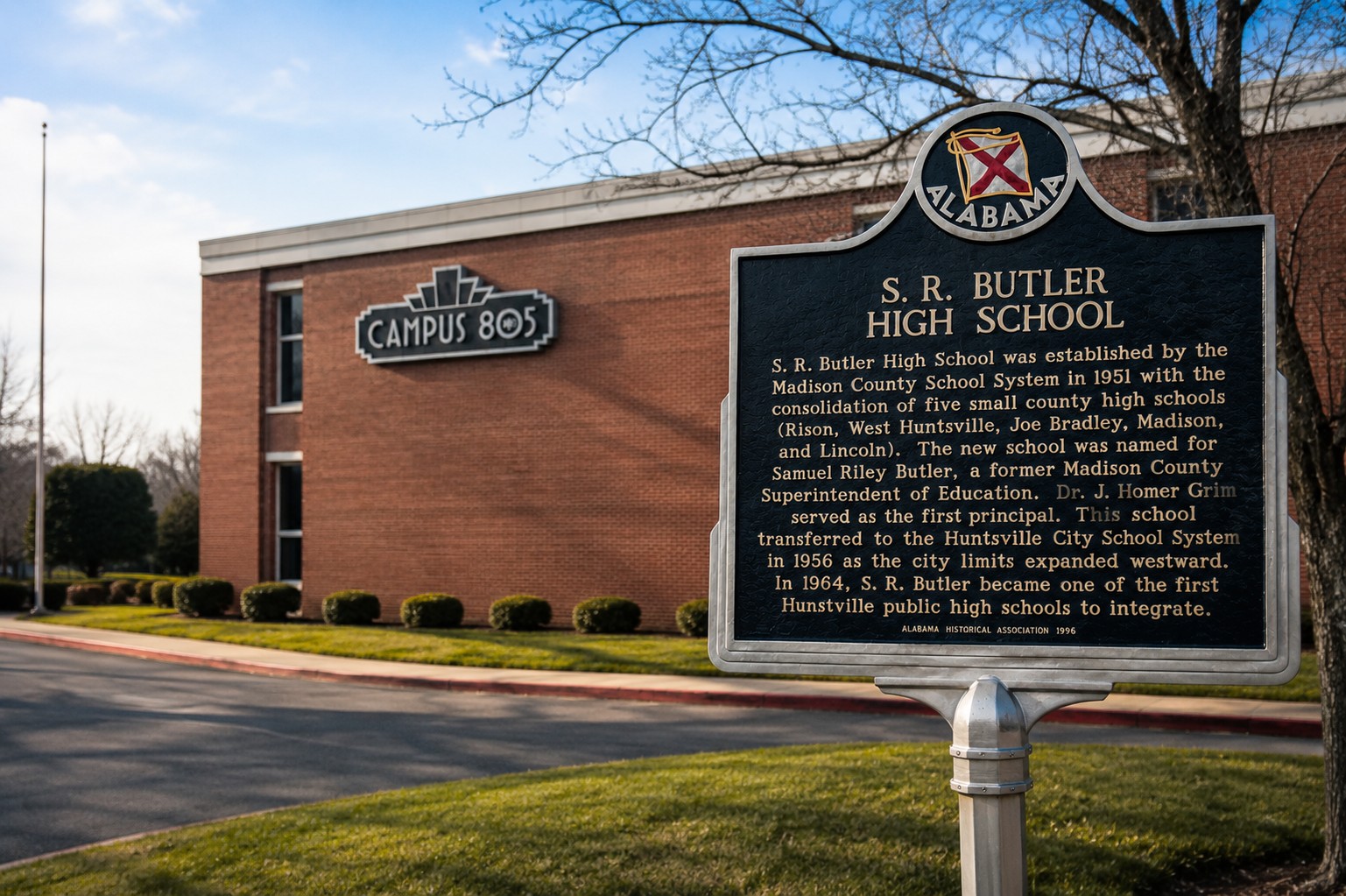
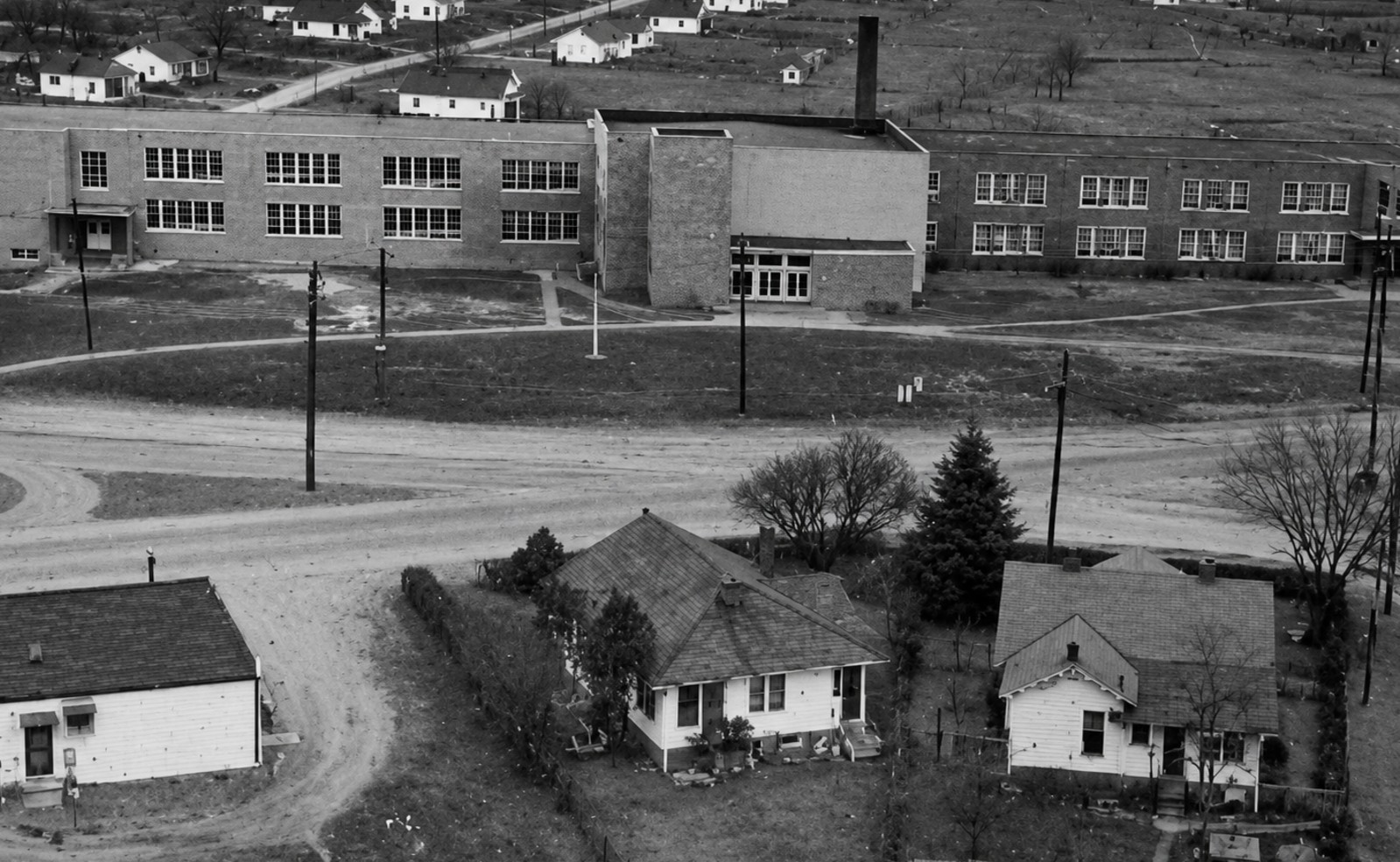
In 1932, a red-brick schoolhouse opened on the west side of Huntsville and began the work of teaching children in a city that was still a cotton town. For the better part of seventy years, the building did what schools do. Then the doors closed and the place sat still.
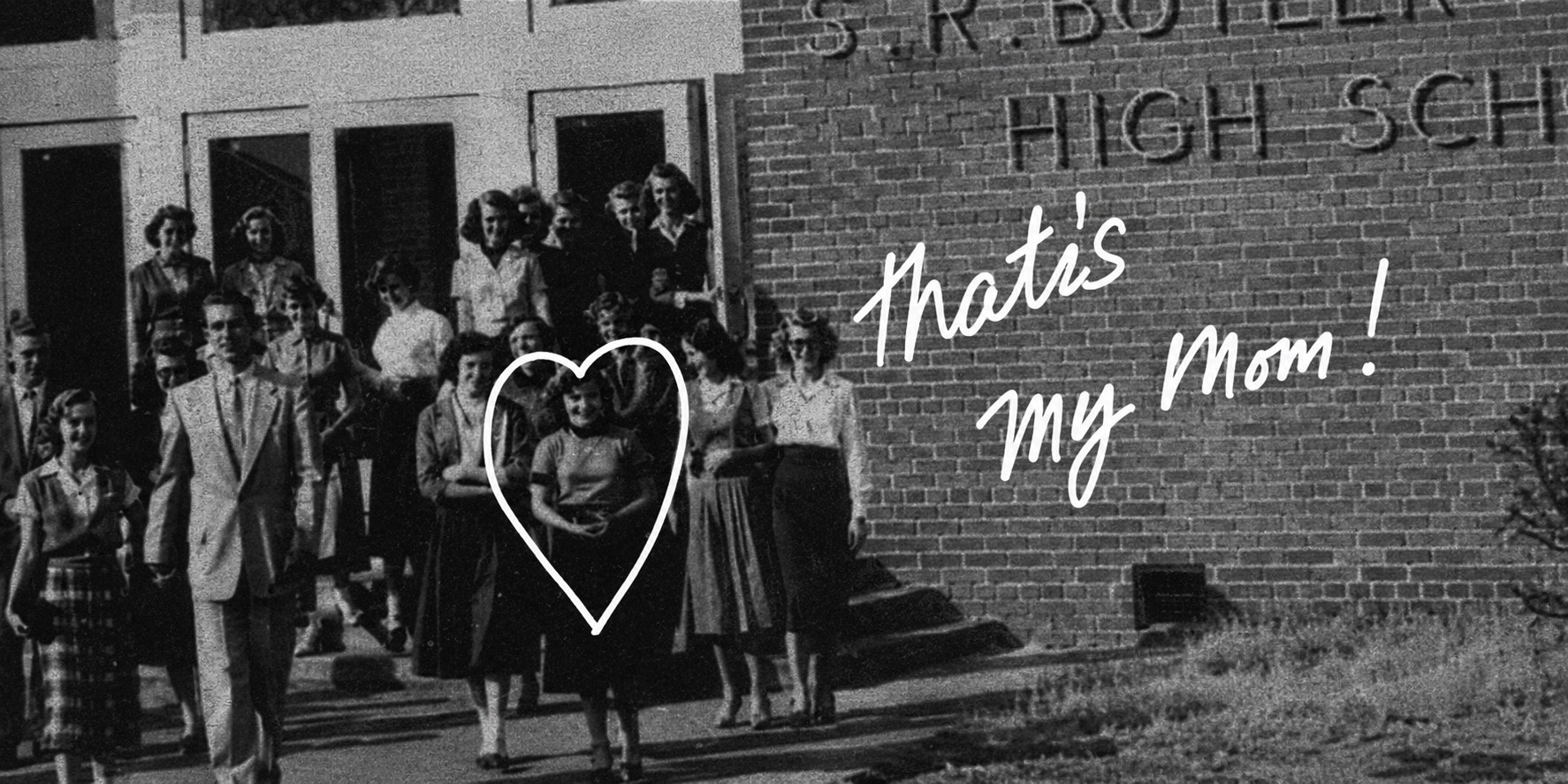
My family history ran through that building long before I ever helped reintroduce it to the city. My mother graduated there in 1934, when it was Butler High School. My parents grew up in west Huntsville. My brothers, my sister, and I were all raised there. We all went to school in that same building during its different lives. I attended Stone Middle School from 1989 to 1991.
When the school closed, I was asked to deliver farewell remarks as both a former student and, at the time, Chief of Staff to the Mayor.
Years later, I found myself helping shape what came next.
By the early 2010s, Huntsville had become something the building's first students could not have imagined: a city of engineers, makers, and a craft beer scene punching far above its weight. What it did not yet have was a place to put all of it under one roof.
In 2016, Schrimsher Properties hired me to help create one.
CAMPUS ORIGINS.
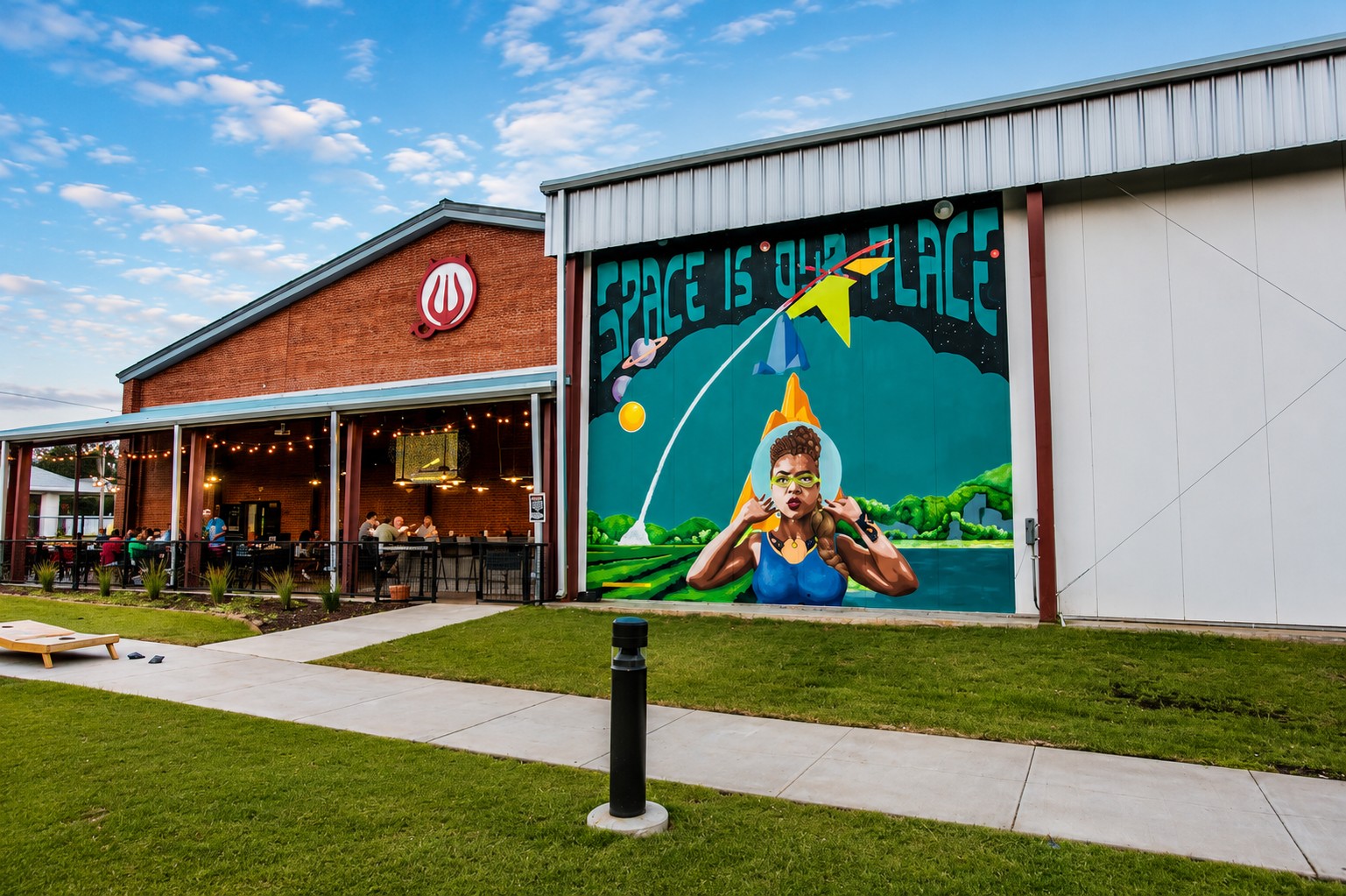
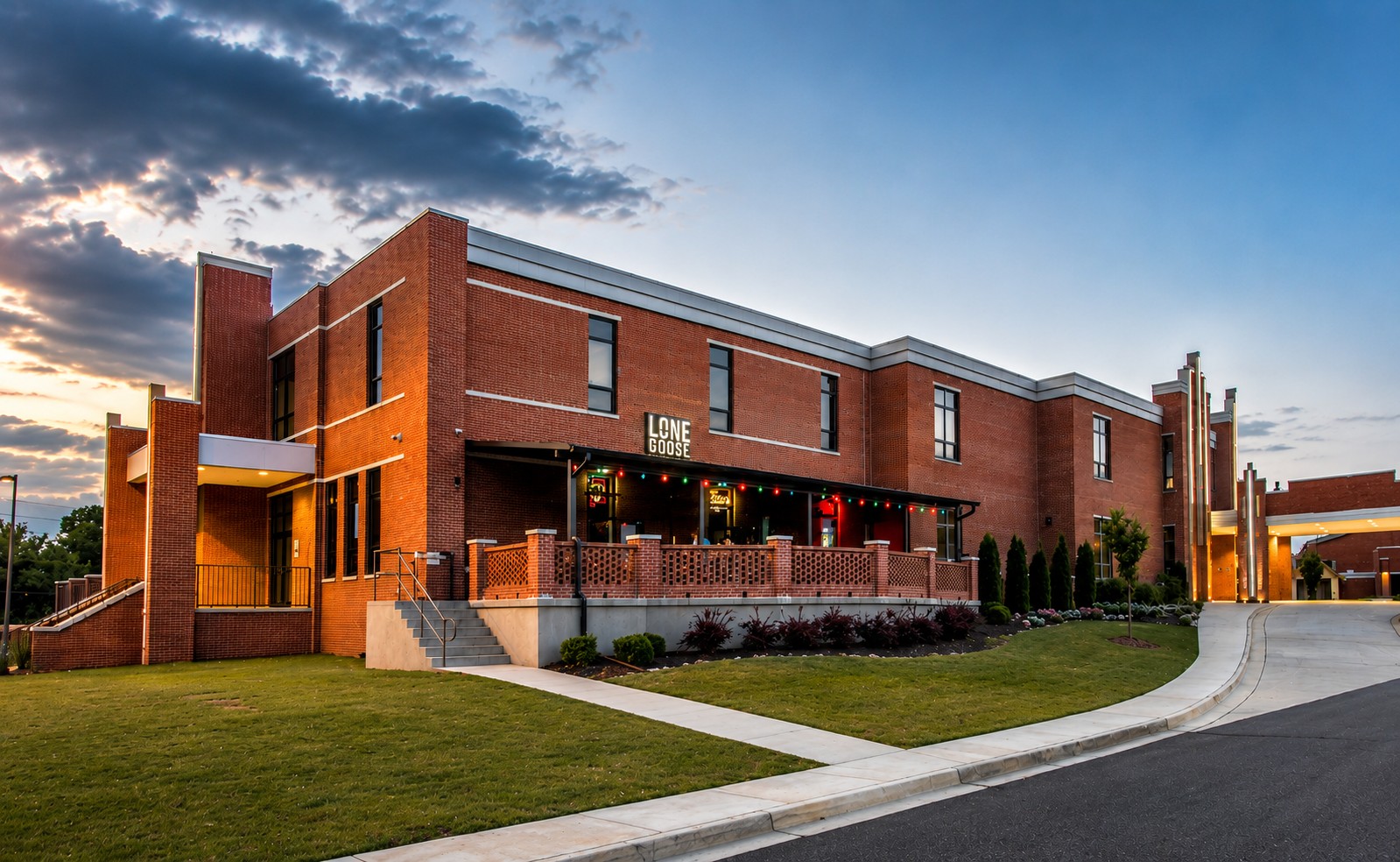
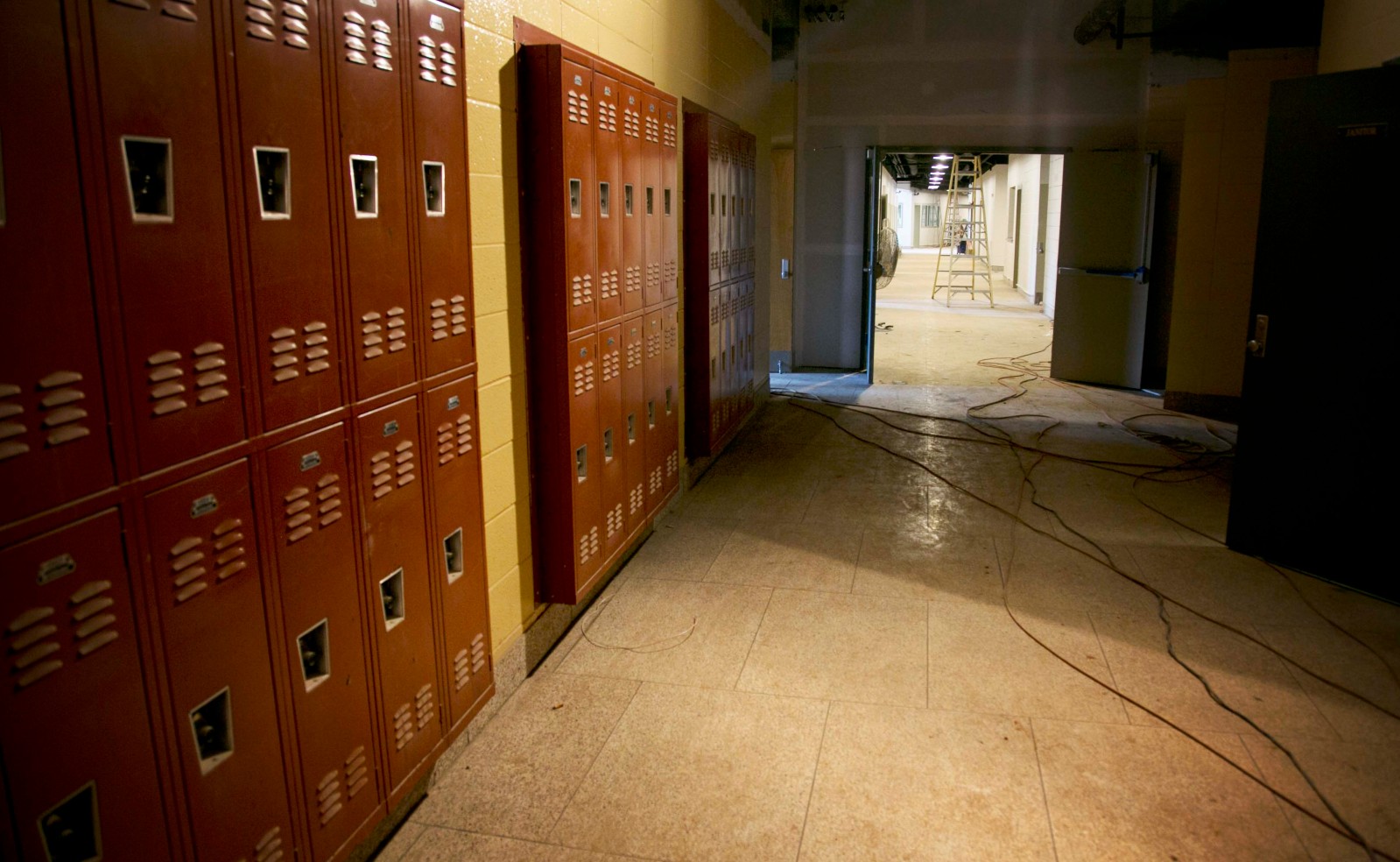
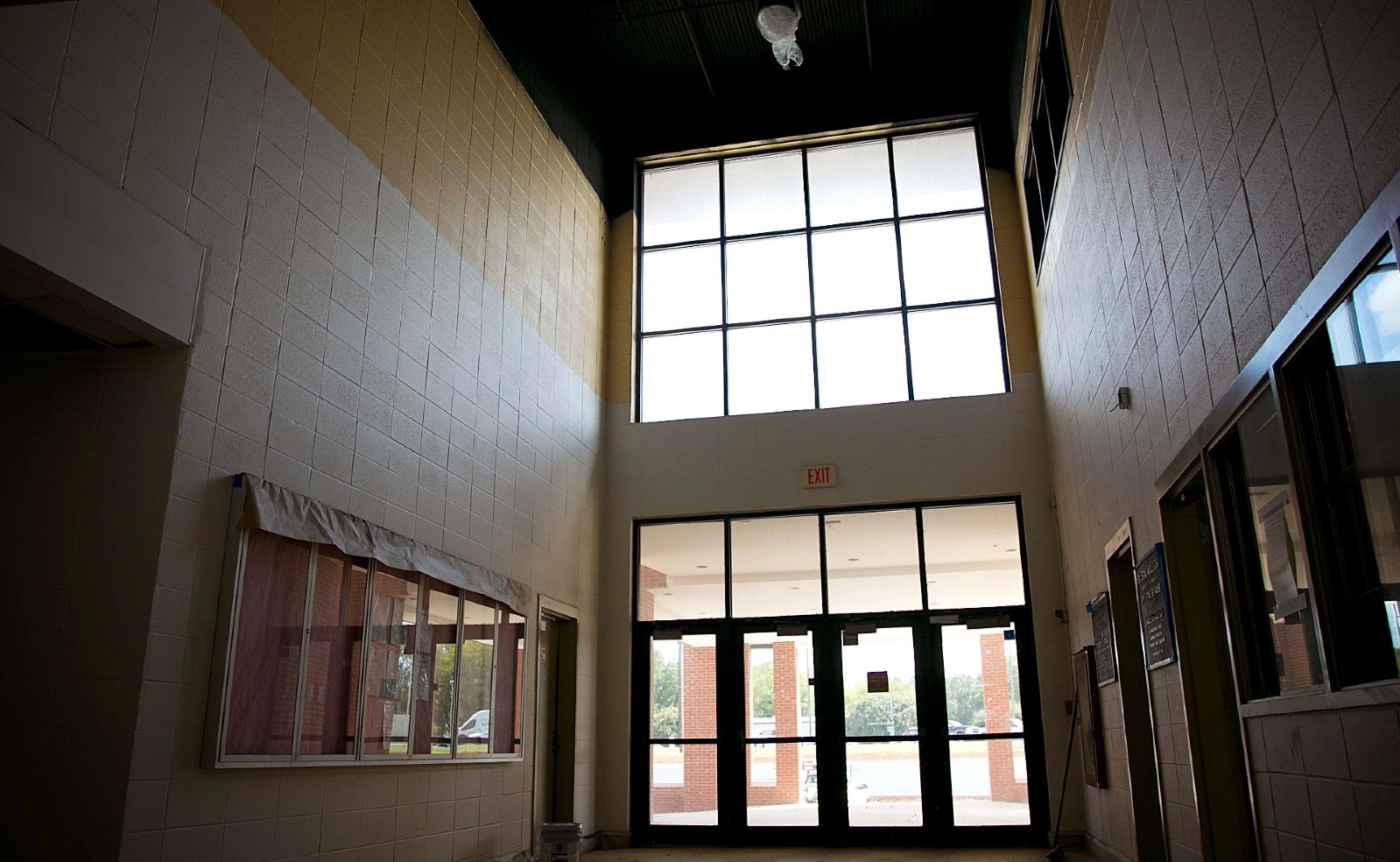
The pitch was simple to describe and almost impossible to execute: take a vacant 75,000-square-foot middle school and turn it into a cultural anchor. Breweries in the classrooms. Restaurants in the cafeteria. A distillery where the gym used to be. A place where the building's memory was a feature, not a problem to be papered over.
I wasn’t hired to build it. I was hired to help give it a name, a voice, and a story strong enough to make the idea hold.
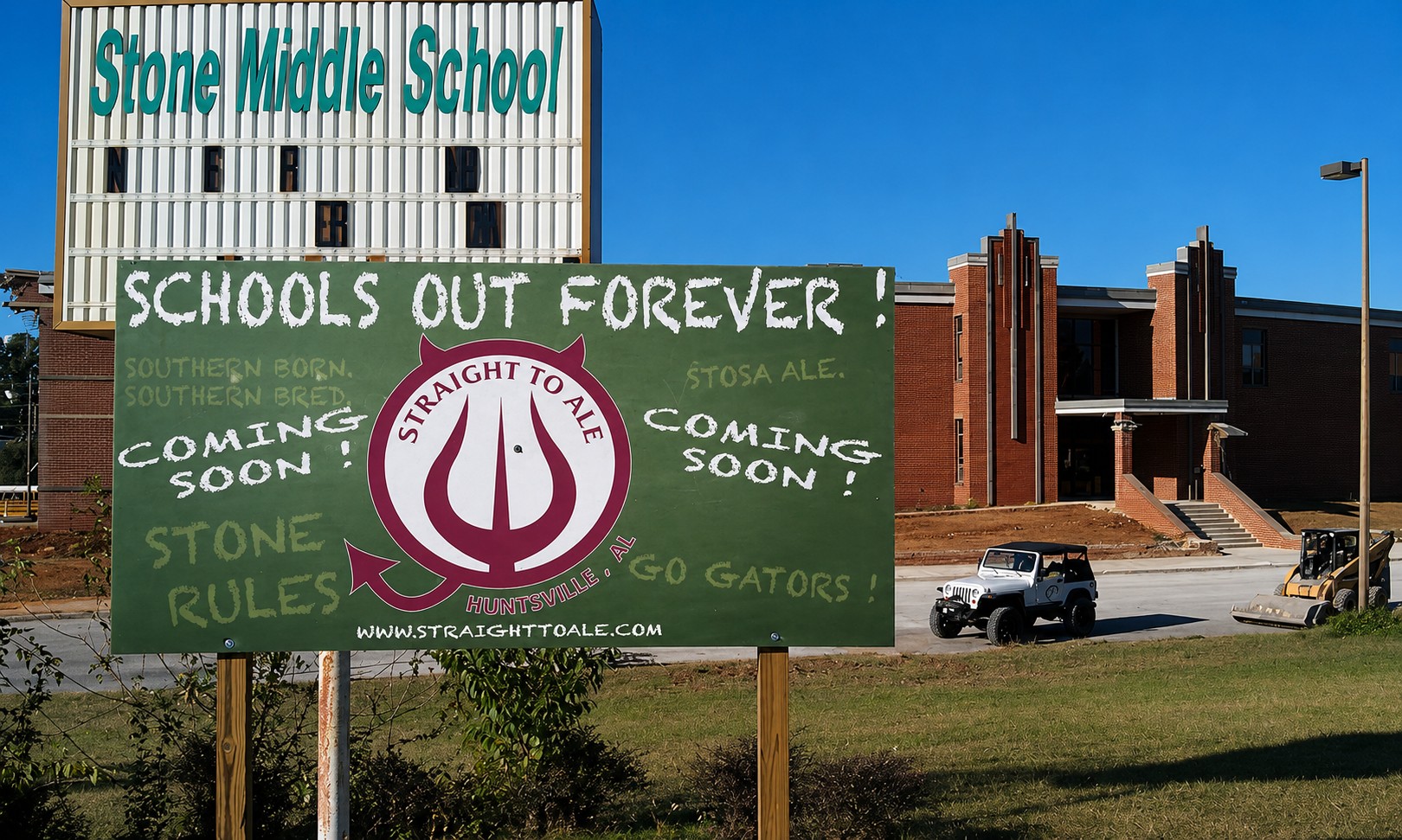
For a time, the property was discussed simply as the old Stone Middle School site. That was never going to be enough.
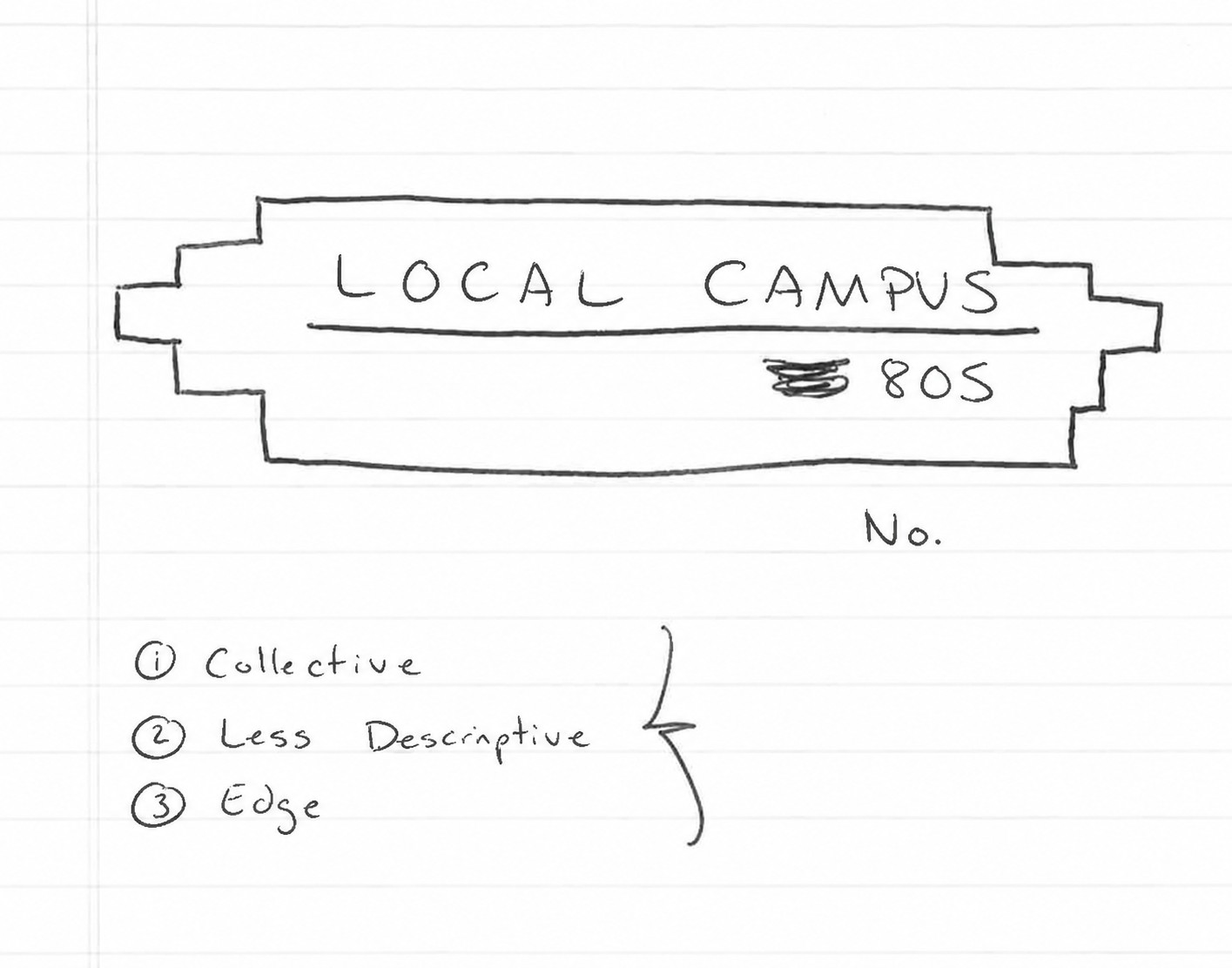
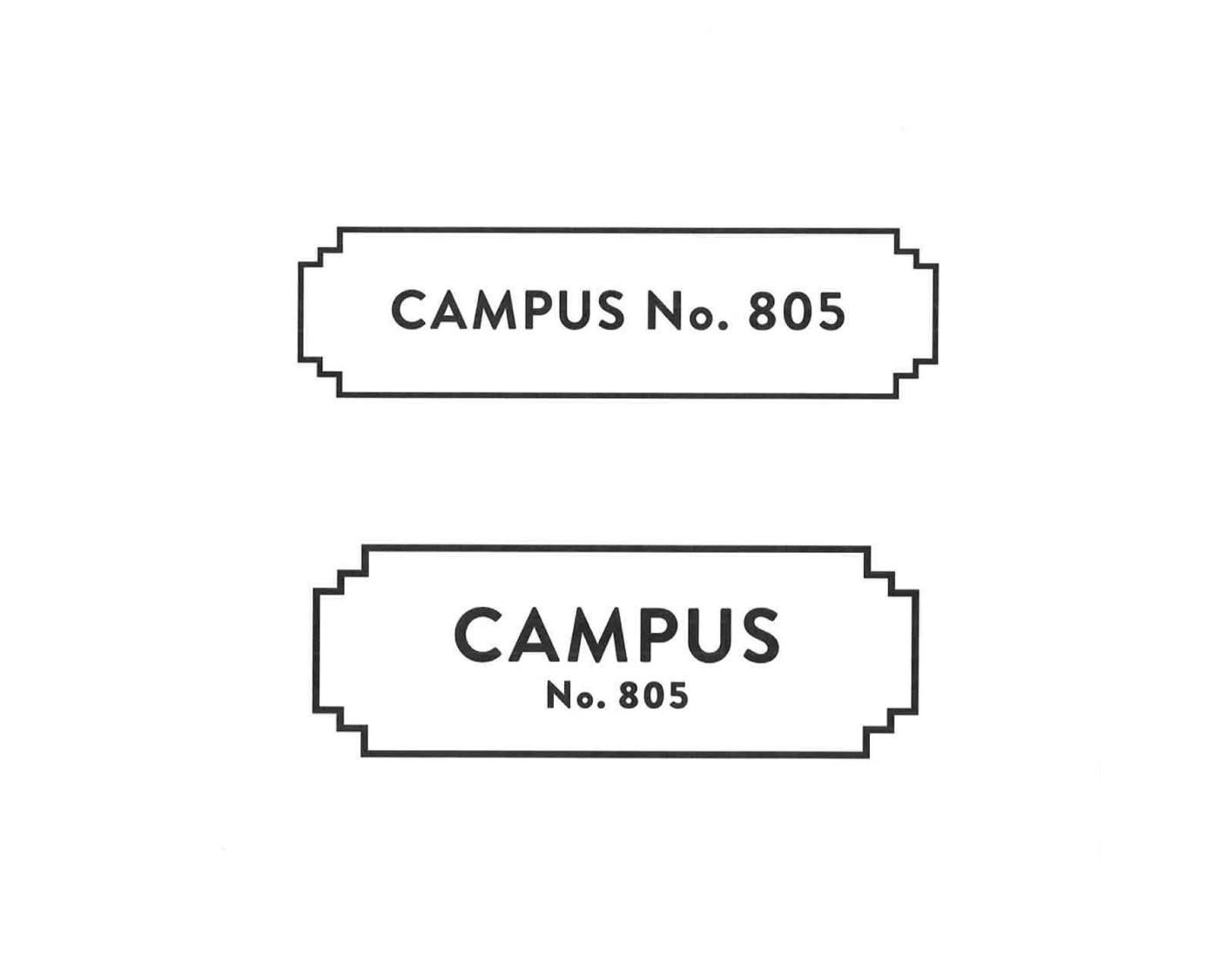
The naming direction that ultimately took hold, Campus No. 805, grew out of an idea I brought into the process early, one rooted in the building itself and in the part of Huntsville that raised me. The campus was literal. The "805" was a nod to 35805 and west Huntsville. The formal "No." was there from the beginning and remains part of the official system, even if the spoken shorthand became simply Campus 805.
I wanted it to feel like the kind of numbered institutional naming you find in large city school systems, where the place sounds grounded, civic, and already woven into local memory.
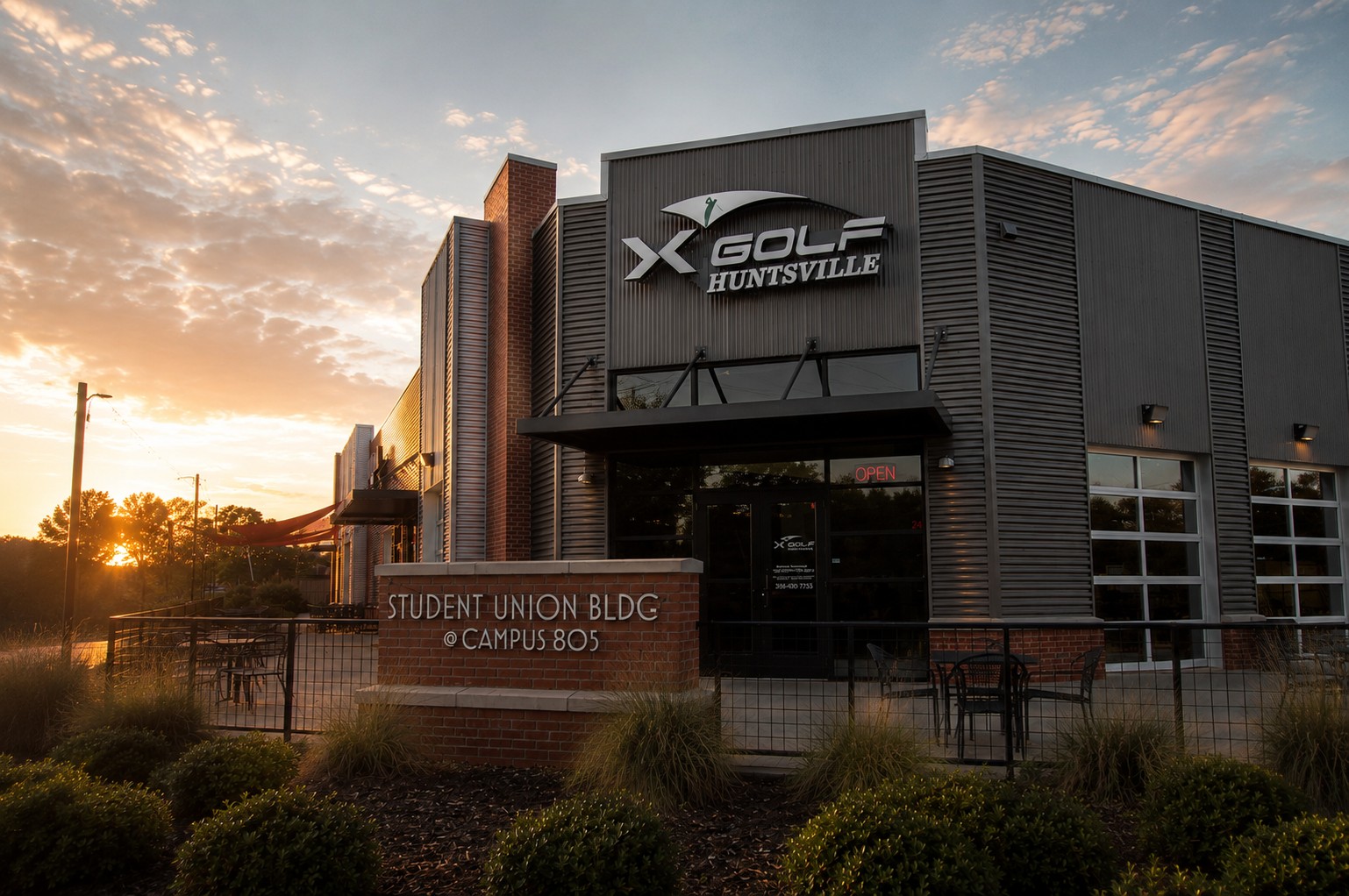
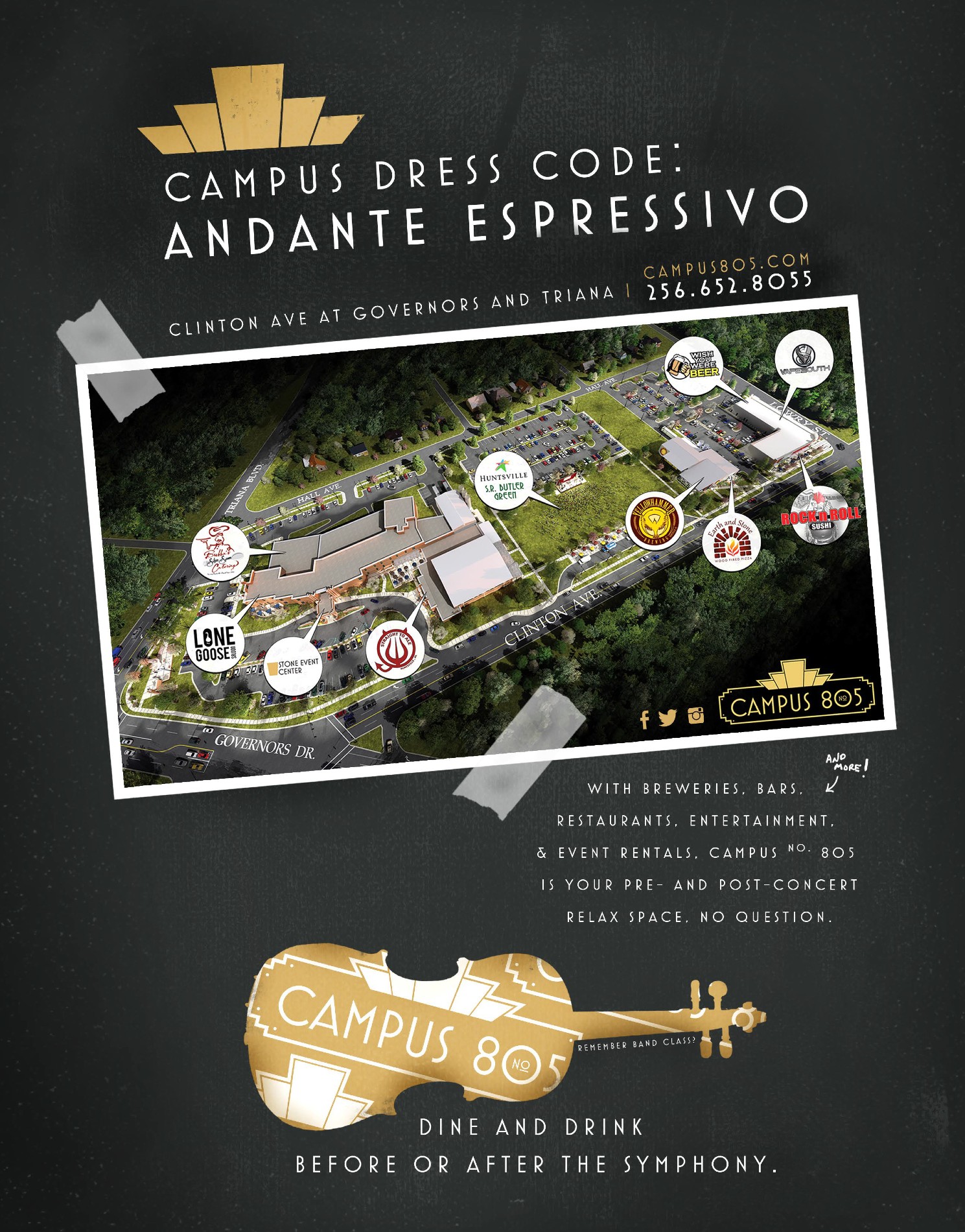
Once that logic took hold, the rest of the property began to organize itself around it. A separate retail building became the Student Union. The green space between the main building and the extensions became S.R. Butler Green, a nod to the site's earlier life and its school color. The language of the project grew directly out of the campus itself.
The architecture that shaped the name also shaped the system.
THE MISSION.
Campus No. 805 was not a typical development pitch. It was a bet that Huntsville's brewers, makers, and small operators could share a roof and pull a city across town to drink, eat, and stay awhile. That bet needed a story, and Schrimsher Properties hired me to tell it.
I handled the engagement from end to end: brand strategy, naming direction, original logo sketches, copywriting, website, photography, film and video, print collateral, social media, advertising, launch materials, event planning, and signage. From the first sketch to opening day, I held creative control across every deliverable.
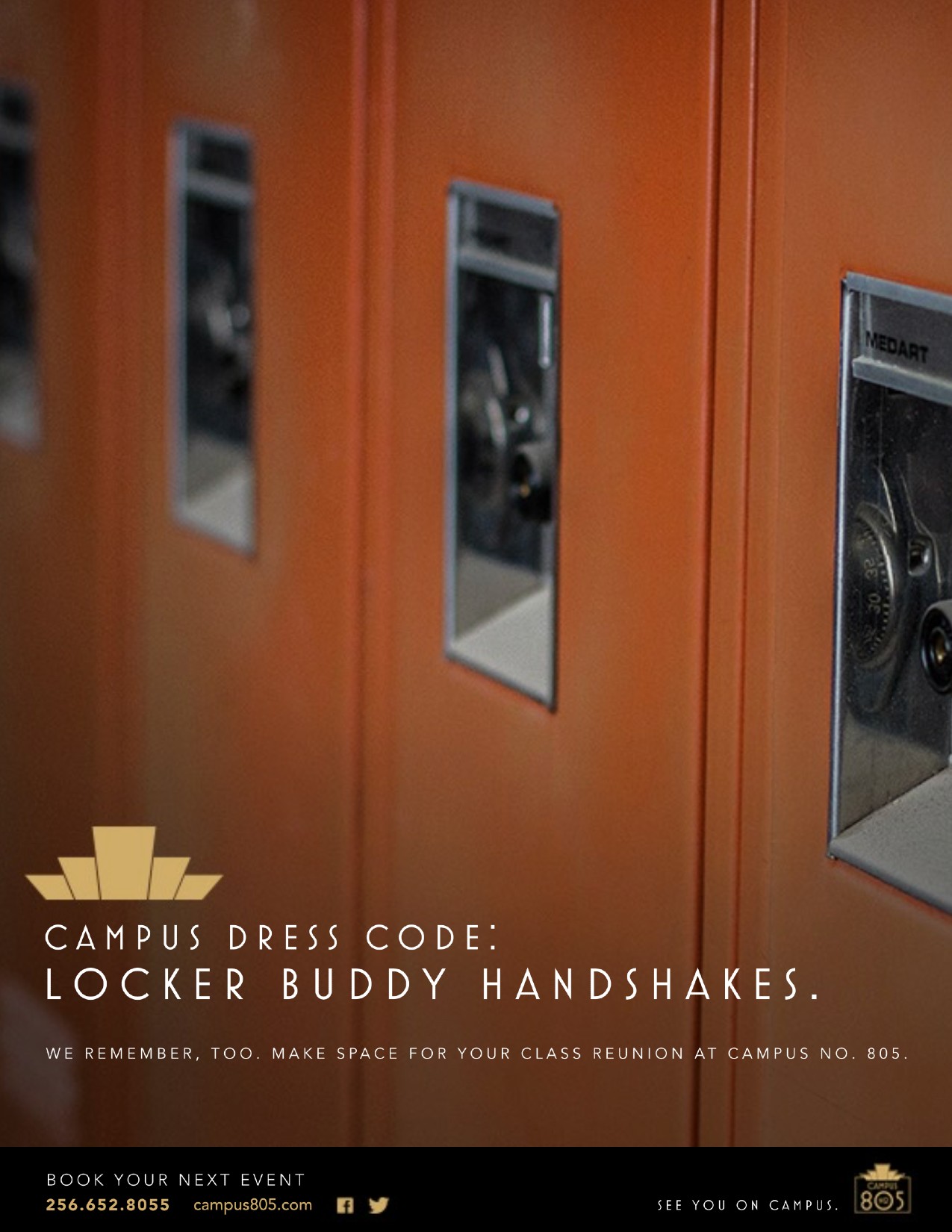
The scope broke into two parallel mandates. The first was to build the brand identity from the ground up: a name, a mark, a voice, and a system that could hold a brewery, a barbecue joint, a distillery, entertainment, events, and a growing roster of tenants without flying apart. The second was to tell the story of the building itself. The classrooms. The lockers. The gym. The children who grew up there and the adults who would now walk back through the front doors for a beer instead of a pop quiz.
How do you honor a building that taught a city's children without turning it into a museum? The answer was to stop treating history as a liability. The old building was not something to be renovated past. It was the whole point.
THE PLAN.
I built the identity around the building's bones, not around it. The system drew from the architecture, especially the physical spires that gave the property its shape and presence. It also pulled from the visual language of American public schools: institutional lettering, gym graphics, hallway numbering, and the kind of details people remember even when they think they have forgotten them.
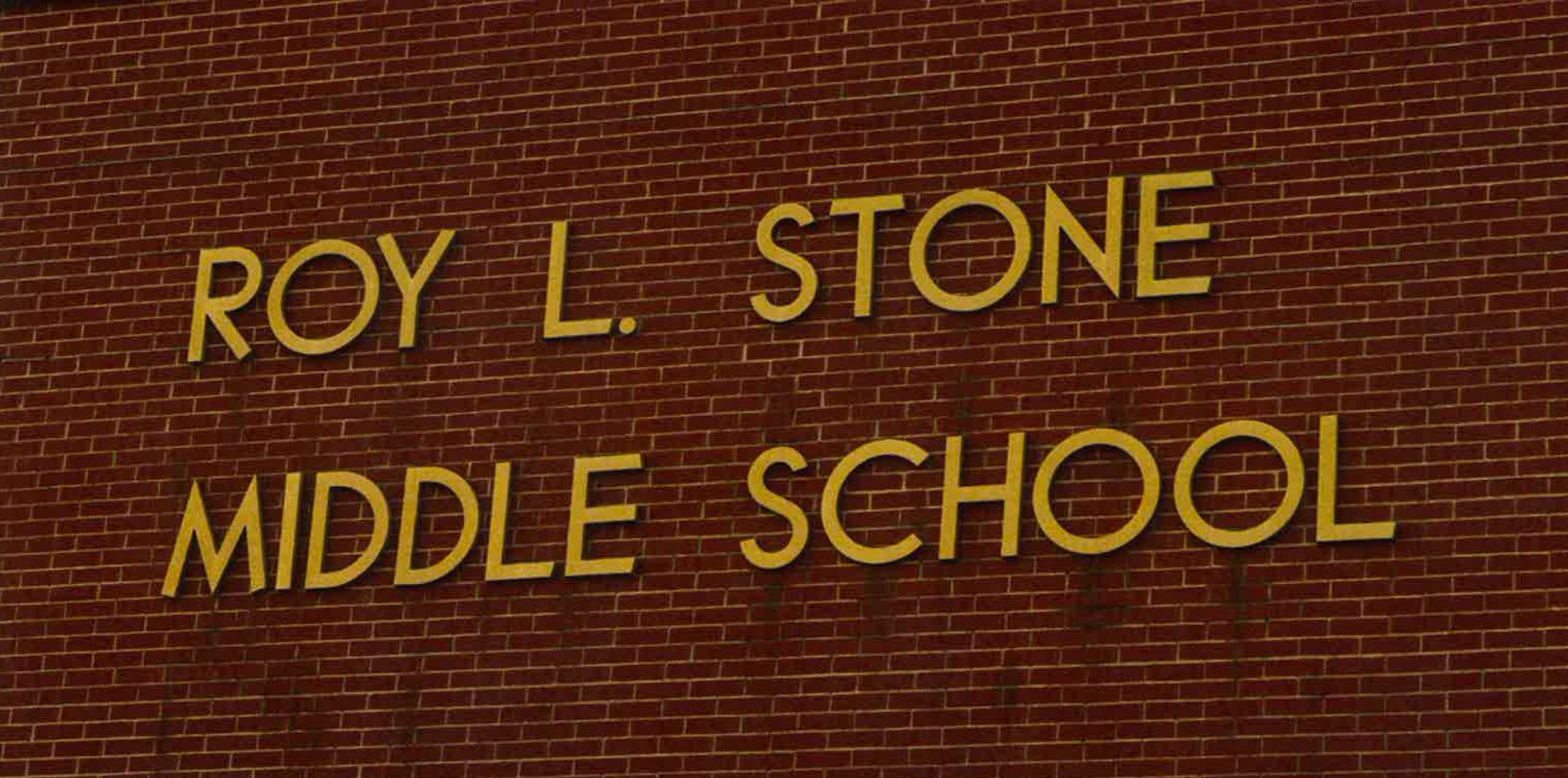
My original vision was for the brand to use the same font and actual lettering that appeared on the building's exterior at the time of its closing. The point was not to invent a new personality for the property. It was to recognize the one it already had and build from there.
That thinking shaped the full campus language. The project became a true school campus again, only with a different kind of student body. The Student Union building housed restaurant and retail spaces. The S.R. Butler Green carried the school name forward while also nodding to Butler's primary color. Even the way spaces were named helped the development feel less like a real estate project and more like a place that had always been there, waiting for the right excuse to reopen.
This was not nostalgia for nostalgia's sake. It was a way of making the place feel familiar before it felt new.
THE WORK.
Telling Campus No. 805's story meant telling the stories of the people moving in. I worked with the developers, early tenants, local leaders, community voices from west Huntsville, and alumni connected to the school to shape a place that felt rooted instead of fabricated. Some of the first businesses committed before the development even had a final public name.
It also meant getting into the building before it was a building anyone wanted to spend time in. The place was still suspended somewhere between demolition and memory. Lockers remained. Floors remained. Gym surfaces and basketball courts remained. Other details were preserved and repurposed rather than stripped away. In places, the work felt closer to archaeology than branding.
Old yearbooks were pulled. School history was folded back into the narrative.
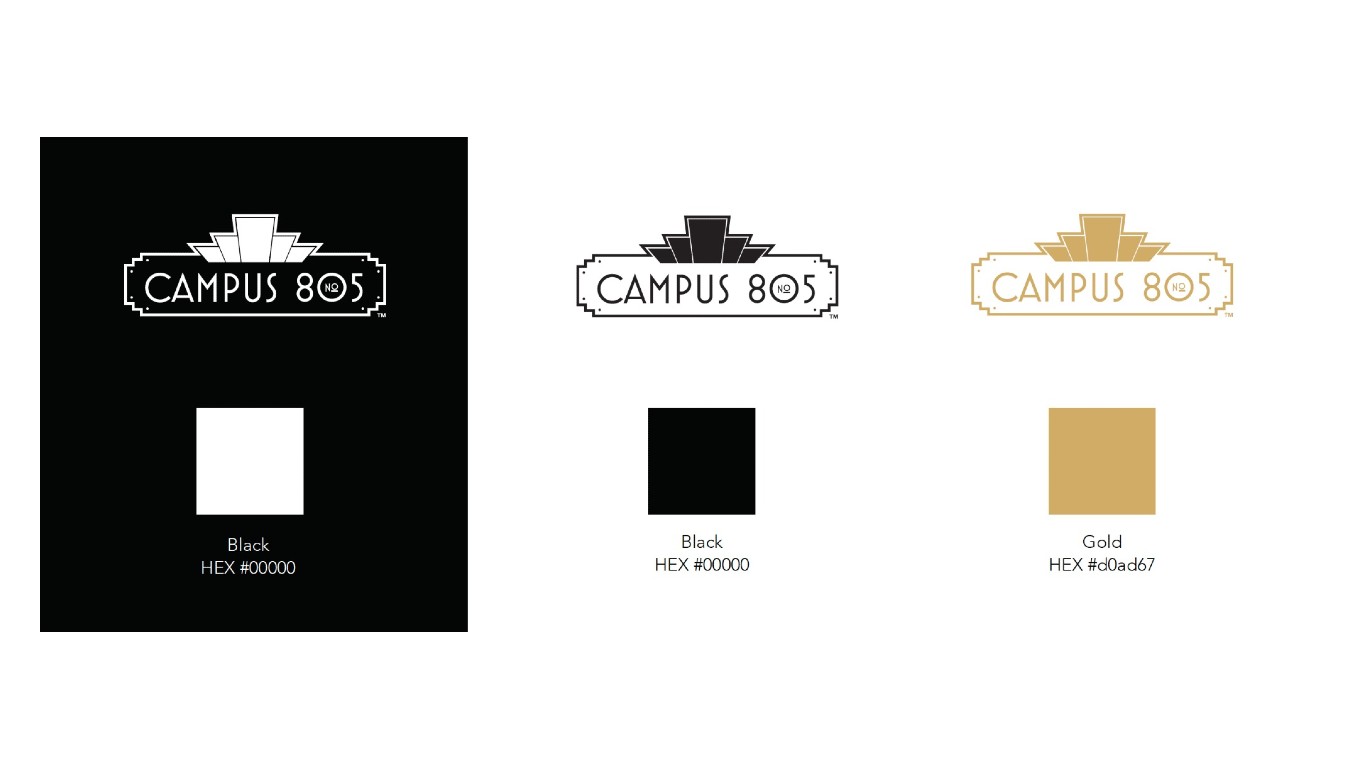
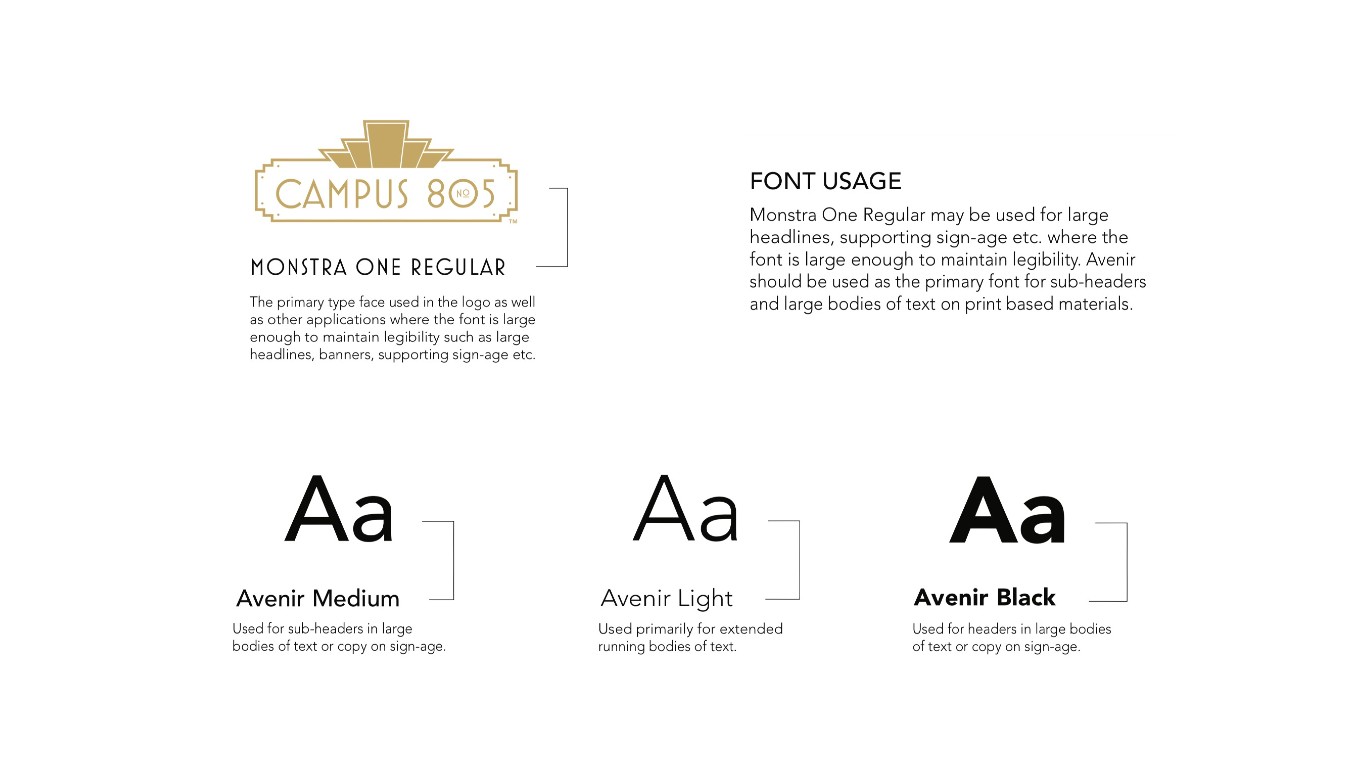
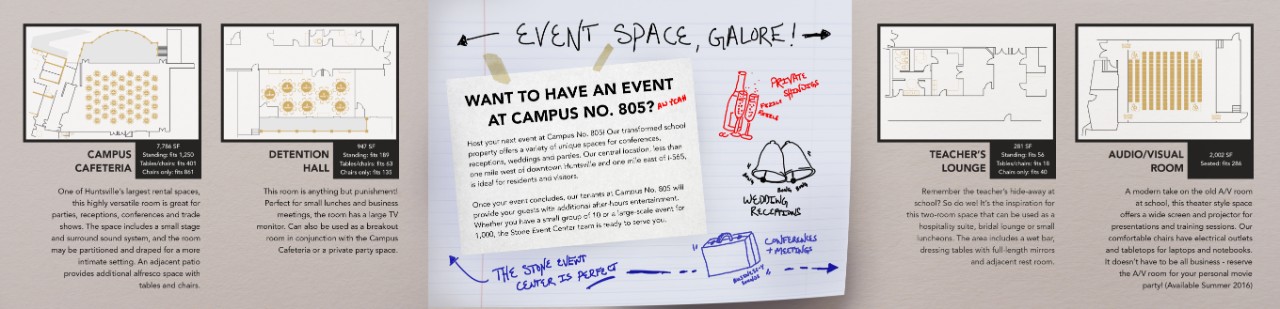
From mark to system, the identity was built to travel across signage, print, web, and the campus itself.

WHAT FOLLOWED.
Cities forget buildings the way they forget people. A school closes, the years pass, and after a while people stop expecting anything from the place at all.
Campus No. 805 was not one of those buildings.
The former school became a destination with staying power. A decade later, it is still drawing crowds, hosting events, and serving as a cultural anchor for west Huntsville.
Campus No. 805 was supposed to be an old school people drove past on the way to somewhere else. It became a place they drove across town to reach.